Mongolian Traditional Food
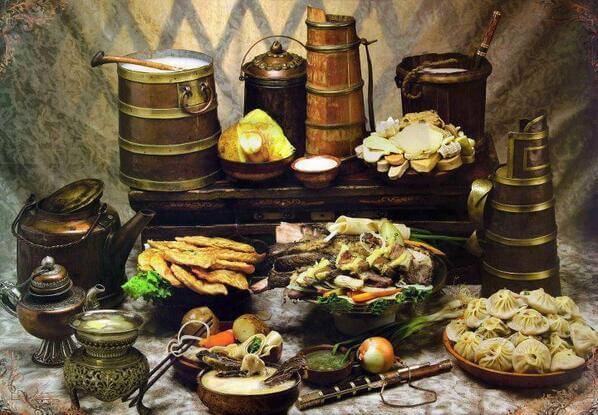
Mongolian traditional food reflects the nomadic lifestyle shaped by a harsh climate and vast grasslands. It is mainly based on meat and dairy products derived from the “Five Livestock” — horses, cattle, camels, sheep, and goats. Dishes such as buuz, khuushuur, tsuivan, and khorkhog represent the heart of Mongolian cuisine, while dairy products like airag, aaruul, and urum showcase centuries-old preservation techniques. These foods are not only nourishment but also an expression of hospitality, cultural identity, and harmony with nature.
1.Buuz
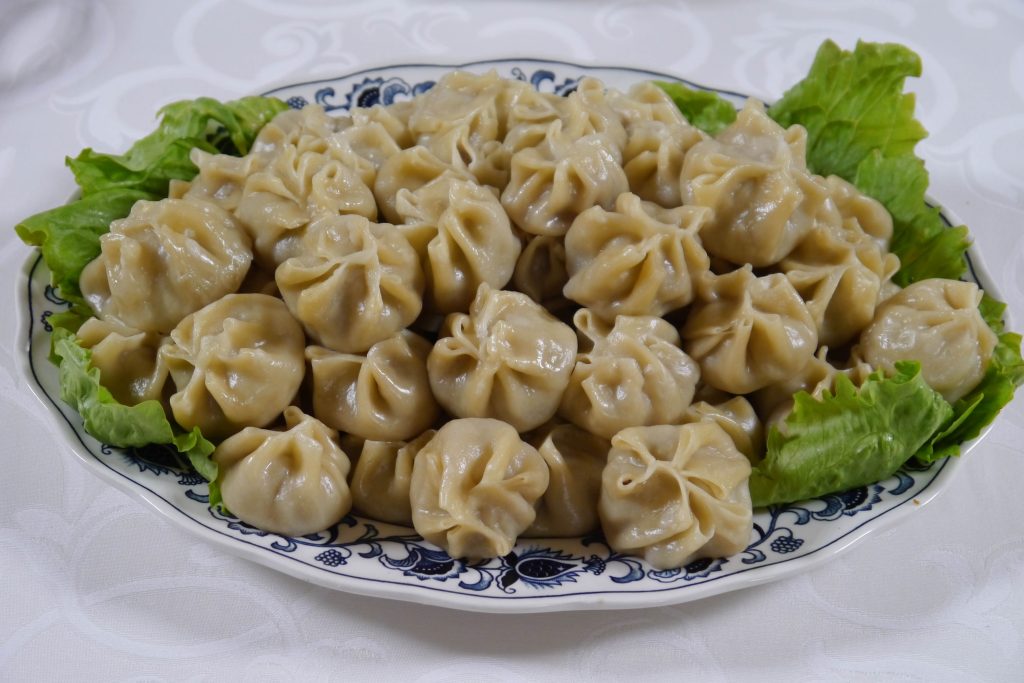
Buuz is a traditional Mongolian dish and is considered one of the most popular dumplings in the country. Some might even say they are the Mongolian national food.
It is a steamed dumpling filled with meat, usually lamb, mutton or beef, salt and onion. Buzz can also have fat in it to give it its characteristic flavour, and the one coming from the tail of the sheep is considered especially delicious. Occasionally it might contain herbs, potato or cabbage. The dough used for the dumpling is made from a mixture of flour and water and is rolled into thin circles to wrap the filling.
Buuz is a staple dish in Mongolia, especially during Tsagaan Sar, the Lunar New Year. It is a filling and flavorful dish and one of my favourites during my travels in Mongolia. So make sure to try Buuz to experience a delicious and authentic Mongolian dish!
2.Khorkhog
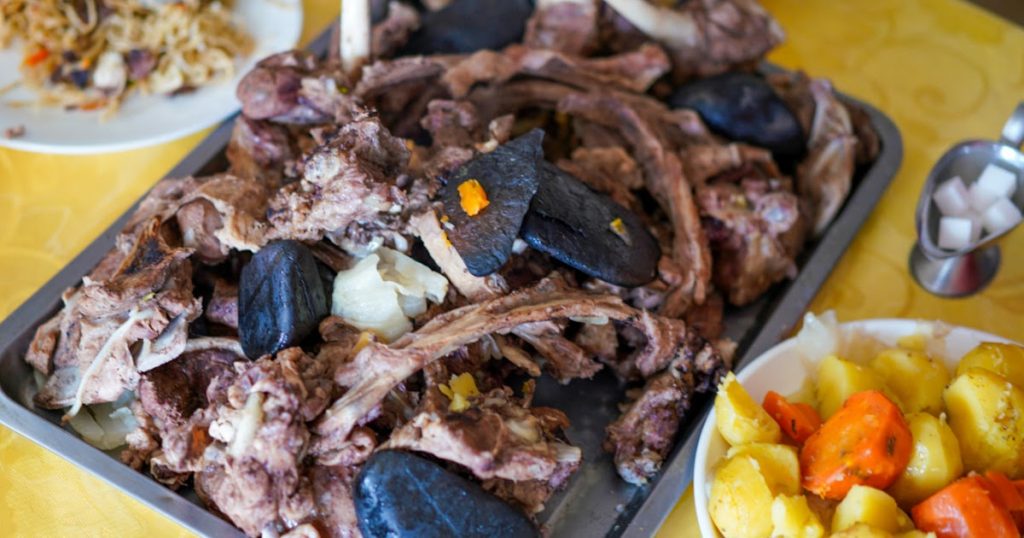
Khorkhog is one of the most famous traditional dishes from Mongolia. Very often called ¨Mongolian barbecue¨.
This dish is made by slow-cooking mutton meat inside a container filled with water and hot stones. The heat of the rocks and the steam created inside the container cook the meat for over an hour and a half. Veggies are optional but not common. Usually potatoes, carrots and cabbage.
The way you need to layer the meat, rocks and veggies is a key part of the preparation of the dish. First, you need to add the meat that takes a long time to cook, like the legs. Then you add some rocks. Then you add the meat that cooks quicker, like the ribs. After that, you add more stones. And keep repeating the process: first meat, then rocks, repeat. After all the meat is in, you add the veggies on top, if you want any.
Khorkhog is delicious! I had the chance to try it while visiting a nomad family, and I loved it. If you can try it, go for it because this dish is quite hard to find in restaurants. Maybe that’s because Mongolians tend to eat it on special occasions. For example, if someone special is visiting or when celebrating the first hair-cutting ceremony, an important Mongolian tradition is about cutting a child’s hair for the first time.
If you want to be extra traditional while eating Khorkhog, after taking the hot rocks out, pass the stones from one hand to another. Apparently, some Mongolians say it improves blood circulation.
3.Tsuvian
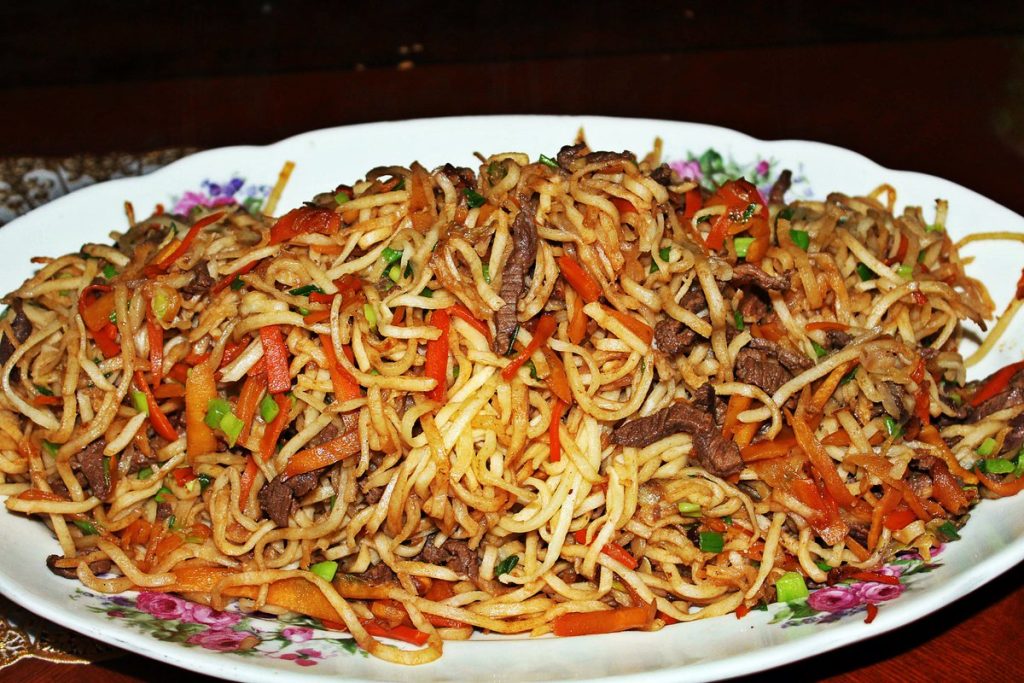
Tsuvian is a dish I couldn’t get enough of. Even my fellow travellers decided to go for another round, it was that popular. And usually, portions are pretty generous in Mongolia!
You might recognize the omnipresent mix of meat and fat. Once again, mutton or beef. But this time, it comes with delicious homemade flat noodles made of wheat, water and salt. Add onion, oil and salt, and you get a mouthwatering plate of Tsuvian. If you have any veggies around, you can also toss them in there, but that is usually rare in the countryside.
I’m usually not great when it comes to eating chunks of fat, but mixing them with noodles and meat actually adds a lot to the dish. It gives them a strong and tasty flavour that blends well with the texture of the noodles.
Interestingly, the traditional way of cooking the noodles is by adding them after the meat is done and letting them steam for around 20 minutes. So no need to use multiple pots and pans!
4.Aaruul (or Curd)
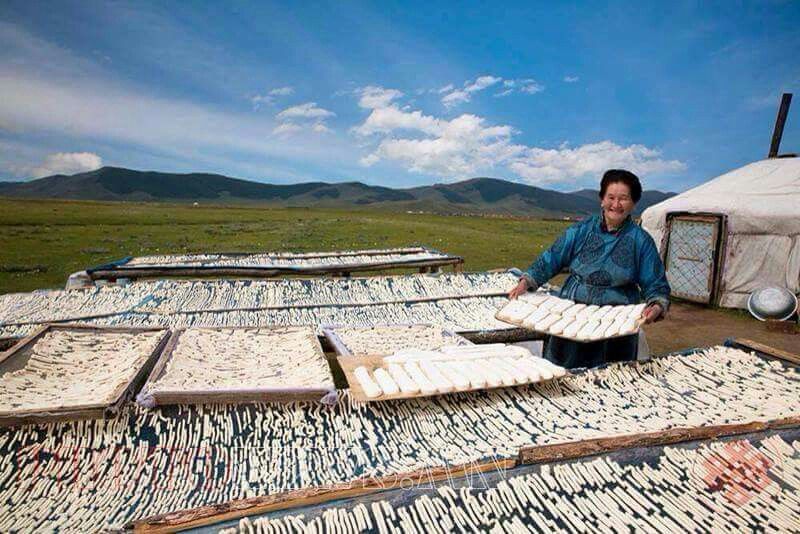
Aarul is another of the dishes you see all over Mongolia. It is basically really hard, sour dried yoghurt. The milk can come from cow, goat, sheep or camel milk, but not from horse milk. The taste varies depending on the piece and ranges between sweetish to very sour. I think it’s a bit of an acquired taste.
Mongolians eat it daily, as a snack, especially during summer, when animals can be milked more. In the countryside, you can see Aarul drying on top of the gers, that’s the traditional way. Making and selling Aarul is one of the ways nomadic families from outside the cities can make some money. It’s also traditional to offer it to guests.
Apparently, some people believe it’s good for your teeth because milk contains calcium. For that reason, giving it to children is quite popular, so they get good teeth!
5.Khuushuur
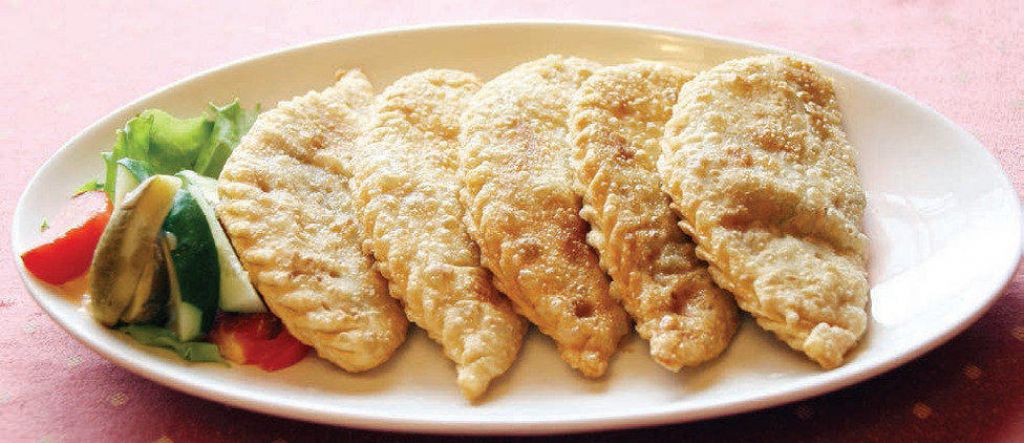
Khuushuur, or Mongolian fried dumplings. It’s a delicious dish that I couldn’t get enough of when I visited the country.
They can be filled with meat or veggies, like potatoes. However, the meat ones are by far the most common ones. The meat used for Khuushuur is prepared in the same way as the one for Buuz, the other popular Mongolian dumpling, so it’s also lamb, mutton or beef.
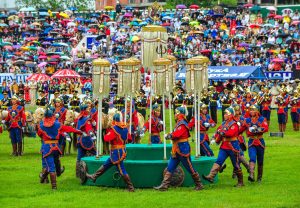
You might have heard of Naadam festival, the biggest one in Mongolia. Well, Khuushuur is the main dish everyone eats during the festival, so it’s quite an important food! Of course, Mongolians also eat Khuushuur outside the festival. However, they are not as popular as Buuz.
These delicious deep-fried dumplings always bring back good memories for me, so make sure to try them if you have the chance.
6.Eezgii
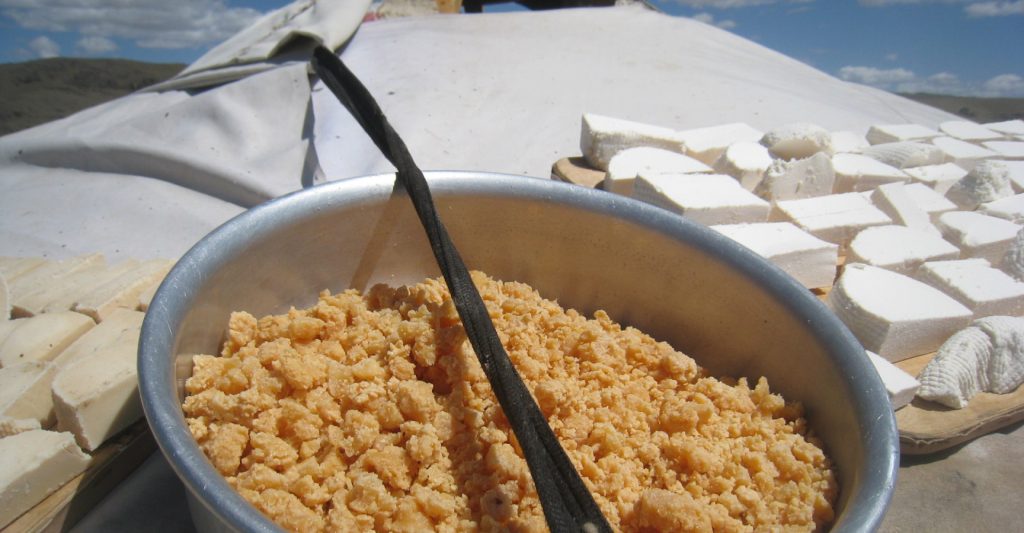
Eezgii is dried goat, camel or cow cheese. Never from a horse, same as with Aarul. And as Aarul, I find it a bit of an acquired taste.
The preparation is very interesting. To make it, you heat up milk, and then add a bit of yoghurt or a bit of Airag (fermented milk). After that, you boil it and stir it. With time, the milk will split and separate into cream and what Mongolians call yellow milk or Shar Suu, clarified butter. The cream is then dried in the sun until hardened, and that becomes Eezgii.
Mongolians eat Eezgii as a snack daily, similar to Aarul. In between meals.
7.Urum
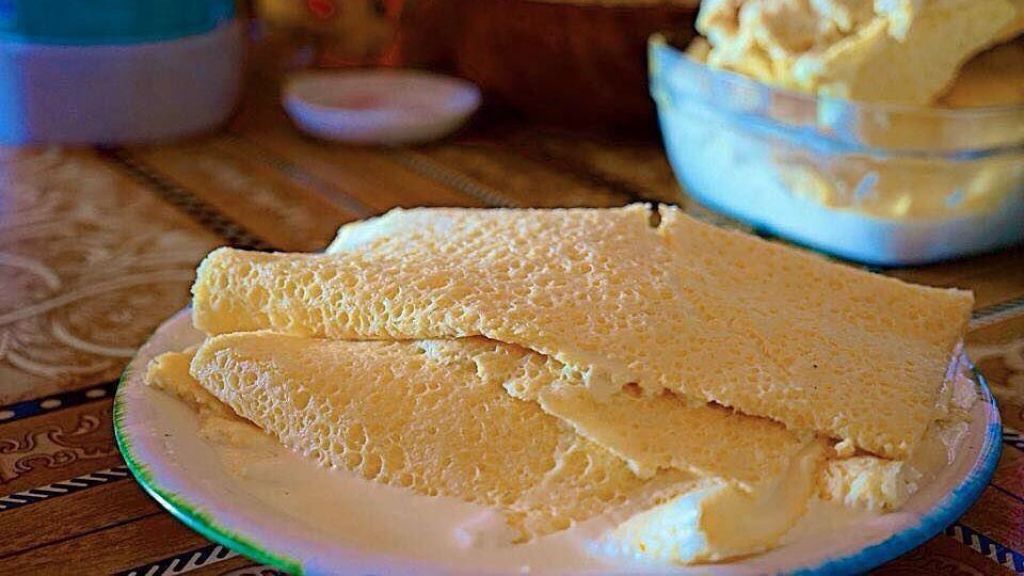
Urum is another Mongolian dairy product. Urum is coagulated foamy cream, popular as a breakfast dish, with Gampir or Boortsog on the side. Traditional Mongolian breakfast food gives you a lot of energy to start the day!
If you are wondering how in the world you make it, as I did when I first saw it, it’s actually not too complicated: first, you heat up the milk, without bringing it to a boil. Too much heat and the milk burns, too little, and it won’t work. Once heated, you slowly add new milk to the edges and reheat it multiple times until a thick layer of foam forms.
8.Airag
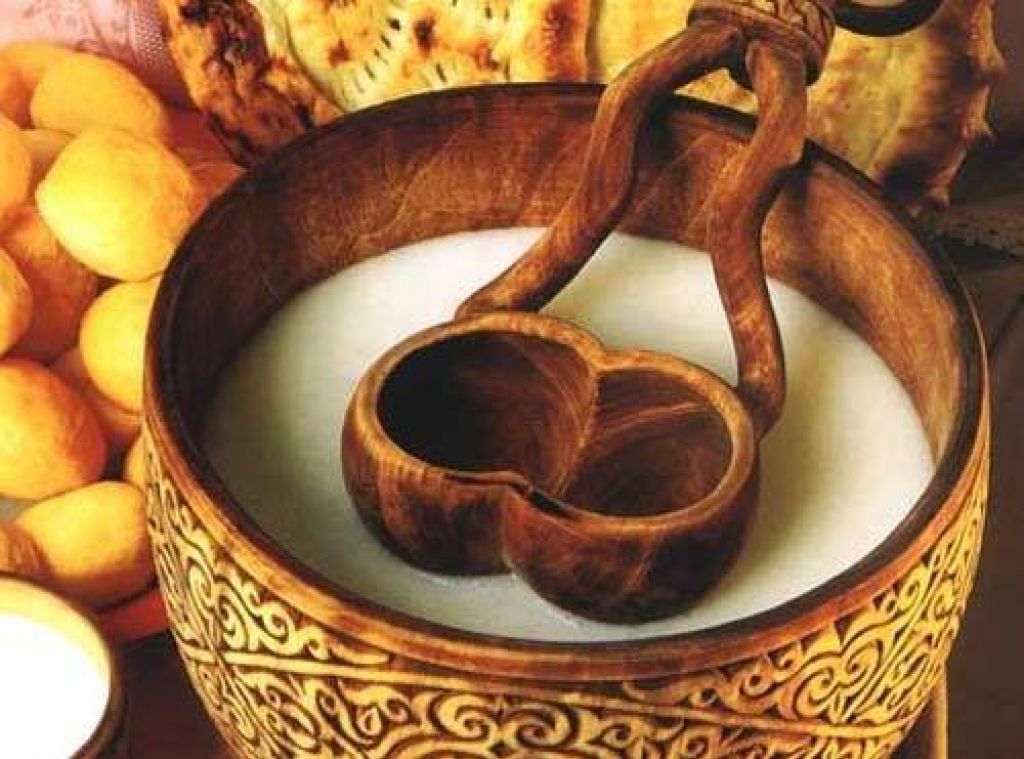
Airag is a traditional Mongolian drink made from fermented mare milk.
The process is fascinating. You add old fermented airag to fresh milk and start stirring the mix. The more you stir, the better it gets, so you need to stir a lot. After a long session of mixing and stirring, you let it rest overnight, and it will be ready the next morning. After it’s done, you have about a week to finish it, because every day it’s going to get a bit sourer.
During the summer, Mongolians drink a lot of Airag. Similarly to Aarul, summer is the season when you can milk your animals, so dairy products are more popular at that time. During Winter, the mares need their milk to feed the baby horses, so Mongolians don’t milk them. The season with the best Airag, however, is Autumn. They say Airag then is tastier and stronger. That is the one I tried, so I guess I have to consider myself lucky!
9.Suutei Tsai
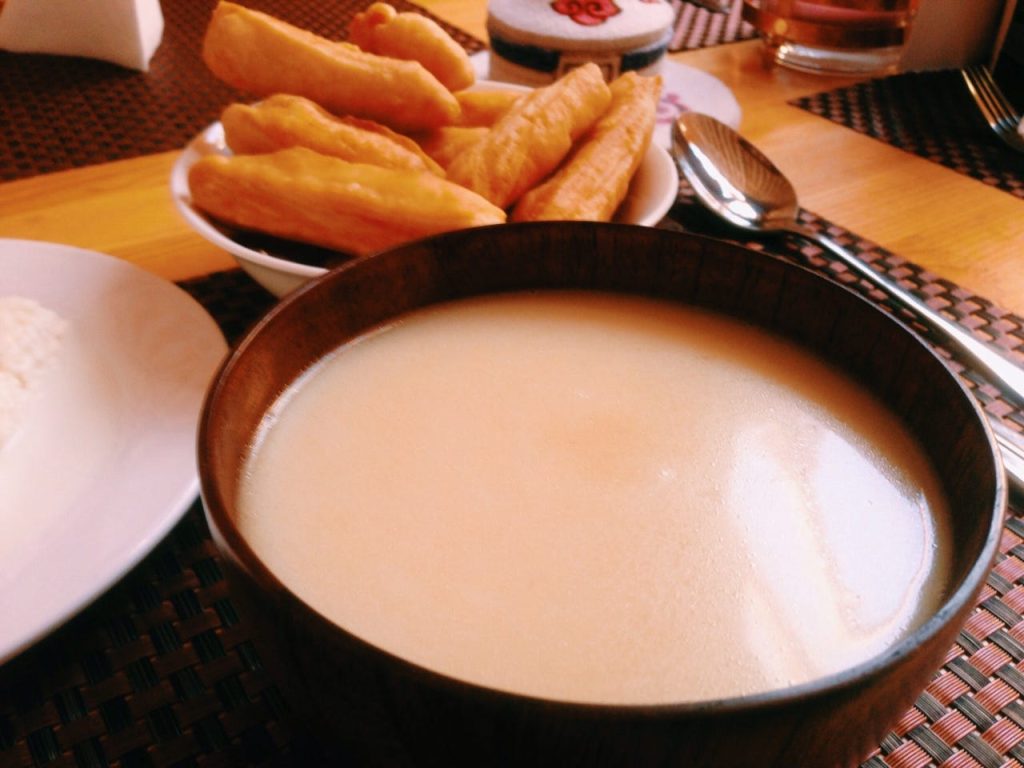
This is one of my favourites. Suutei Tsai is traditional Mongolian salted hot milk tea.
The preparation is quite simple: boil water, add tea and wait until it brews. Then, add salt and milk to it. The milk can come from a cow, sheep, goat or camel, but not from a horse. It’s quick to prepare and absolutely delicious. Very unique and very tasty.
Suutei Tsai is a very popular Mongolian tea, many families make it in the morning. When the tea is ready, the family will usually spill some of it “to the Sun” as an offering and pray a few words. Maybe bless the house, or ask for a good day. It’s a tradition that comes from Tengrism, the ancient Mongolian religion.
If you want to try Suutei Tsai, you can find it in the cities, but it’s more popular in the countryside. In cities, Mongolians also drink black tea with no milk. However, outside, most drink tea with milk.
10.Nermel Arkhi/Mongolian milk vodka/
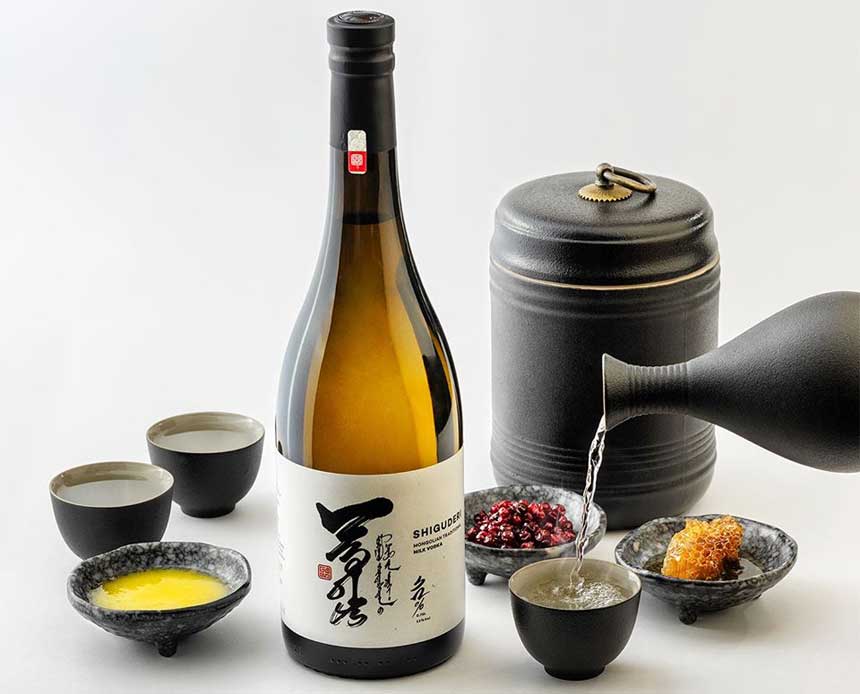
If you need to get drunk like a true Mongol, you need to try Nermel Arkhi, homemade vodka distilled from yoghurt.
This liquor is popular all over the country, and Mongolians make it themselves. As I said before, you make Nermel Arkhi with dairy, with mare’s yoghurt. You cover the yoghurt with a cylinder of metal called burheeg, suspend a bucket on it and cover the entire thing with a bowl or a pot. You fill the bowl with water and boil the yoghurt. This evaporates the contents that then fall into the bucket.
If you visit a Mongolian ger in the countryside, you should give it a go. When I tried Nermel Arkhi, I found it surprisingly strong, and I could definitely find milky notes in it. Apparently, you can add butter to it to make it smoother, but I didn’t try it.
Mongols used to use it as a medicine and even as a remedy for sleeping better. They told me a good chug of hot Nermel Arkhi will make you sweat, relax and help you get a good night of sleep.
I hope that now you have a good idea of what is Mongolian food and what are traditional Mongolian dishes. Exploring a country through its cuisine is one of the joys of travelling, so if you visit the country and want to try real Mongolian food, don’t be afraid to dive in and try anything from this list!
Mongolia is a vast country, and this list doesn’t cover a fraction of the typical Mongolian food out there.